
Krysta L. Engel, PhD; Mark Mackiewicz, PhD; Andrew A. Hardigan, an MD, PhD candidate; and Daniel Savic, PhD, all members of the Myers Lab at the HudsonAlpha Institute for Biotechnology, have published a review along with Richard Myers, PhD, president and science director of HudsonAlpha. The review, available online in Seminars in Cell and Developmental Biology addresses the function of transcriptional enhancers and their role in development and disease. The authors also catalogue experimental tools commonly used to study these elements and discuss the crucial role of novel techniques in deciphering the complex gene regulatory landscape and how these studies will shape future research.
Back
Myers Lab researchers publish transcriptional enhancers review
Related Posts
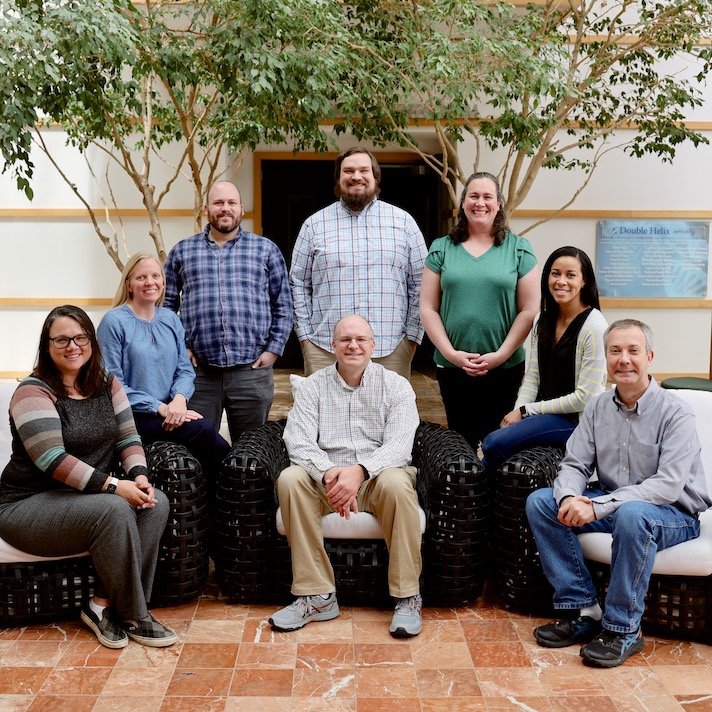
Researchers at the HudsonAlpha Institute for Biotechnology recently published a paper in the American Journal of Human Genetics associating genetic variation in a gene called ZMYM3 with neurodevelopmental disorders. The kicker? They began with one case in Alabama and assembled a cohort of 27 individuals from around the globe using a relatively simple social networking tool and the power of collaborative research.
Read More
As HudsonAlpha Institute for Biotechnology continues its rapid economic growth and advancements in genomics and life science research, the HudsonAlpha board of directors announced today the expansion of its executive leadership team.
Read More